Before anyone meets your team, reads your website or walks into your reception, they have already seen your building. The façade, or front elevation, of an office building is the face of the organisation. It is the first impression, and it introduces your brand to every visitor, every day, without saying a word.
So the real question is not whether your building says something about your company. It is what it says.
In short: a geometric façade uses geometry to shape the face of a building. It gives the building a visual structure the eye can follow, makes it instantly recognisable and memorable, and can work as a structured shading device that keeps the heat out without closing off the view. Here is how we think about office facade design at Space Studio Chennai, in six ideas.
Your Façade Is Your Brand’s Face
It is important that the façade communicates your brand’s values through its design language. A plain glass box tells a visitor very little. A thoughtfully designed building façade places your brand in global competition effortlessly.
That is why we treat the elevation of a corporate office as brand work as much as building work. The pattern, the material and the way light falls across the face of the building all carry a message.
1. Geometry Makes a Building Impossible to Forget
Geometry gives a distinctive quality to your office building, making it both instantly recognisable and memorable.
People give directions by buildings they remember. They photograph them and share them. A strong geometric elevation turns an address into a landmark.
2. Geometry Is How Nature Builds
Geometry, particularly sacred geometry, is the building block of the universe. Nature builds by adopting geometry. A geometric façade is closest to how nature would build if it were to create buildings.
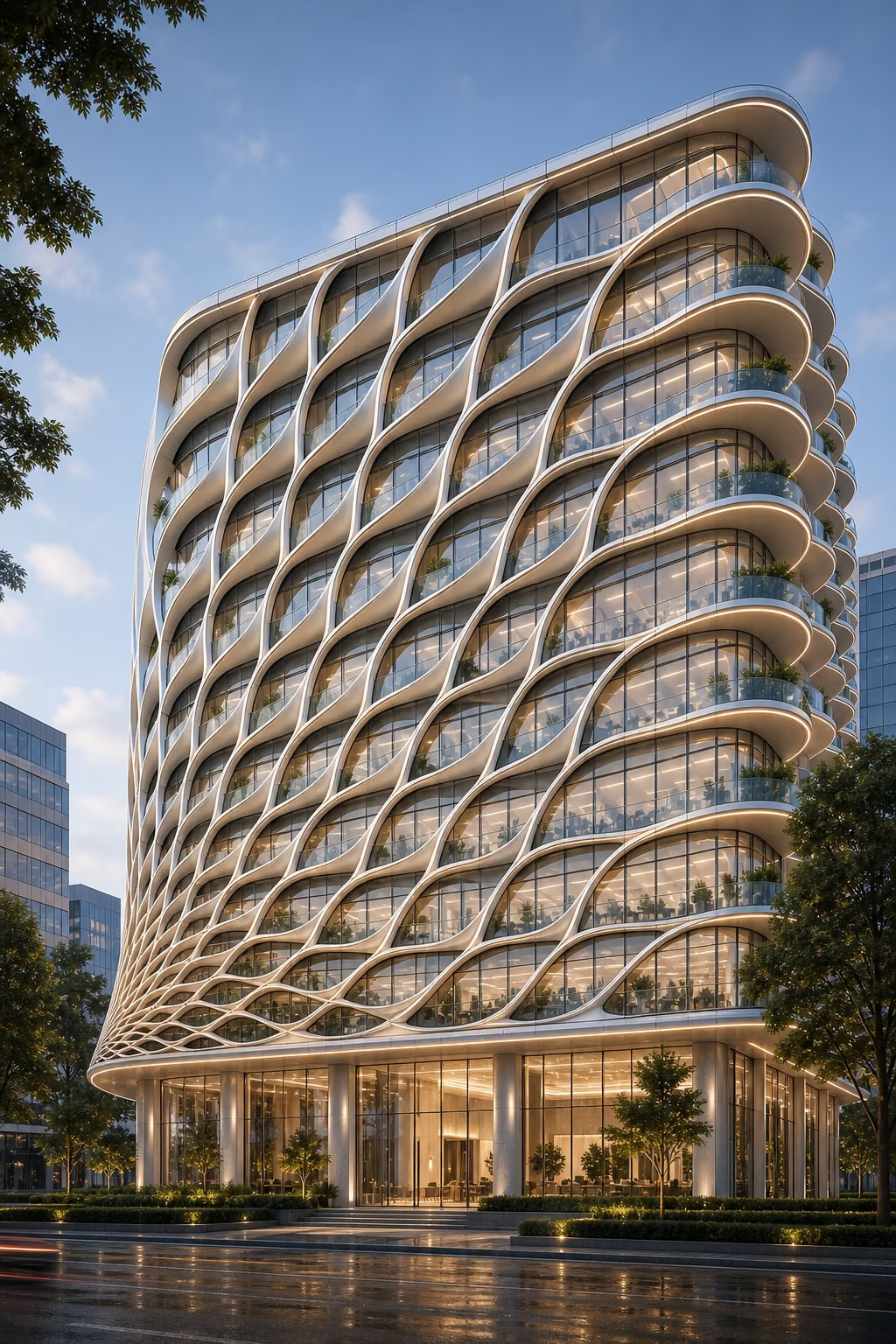
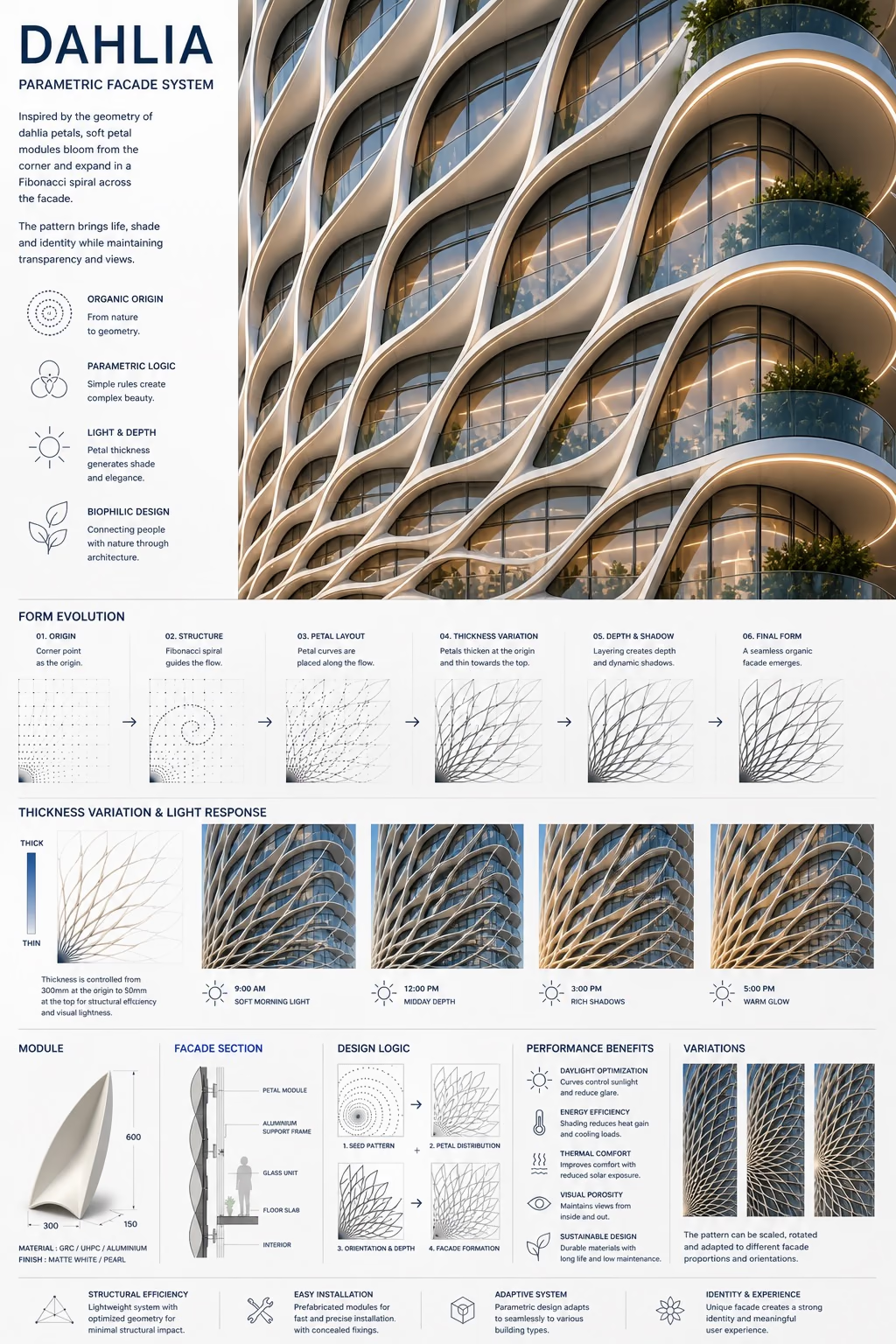
Our Dahlia concept starts from exactly this idea. It is a parametric façade for an office building, inspired by the geometry of dahlia petals. Soft petal modules bloom from the corner and expand in a Fibonacci spiral across the façade.
3. Your Brain Is Wired to Read It
This is the neuroscience of geometric façades, and it is why a good pattern feels right before you can explain why:
- Geometry gives a visual structure to the building.
- It gives the eyes and brain a cohesive composition to follow.
- There is instant recognition of a pattern that is already familiar to the brain.
A random elevation asks the eye to work. A geometric one gives it a rhythm to follow.
4. A Façade Can Be Your Biggest Brand Asset
A memorable façade becomes a massive visual asset. It builds brand equity in three ways.
A Recognisable Brand Landmark
A distinctive geometry adds an identifiable presence and strengthens brand recall and recognition.
Brand Values Translated into Built Form
When a built form becomes part of the brand identity, the brand value is literally set in stone, or brick and mortar.
An Asset That Works Day and Night
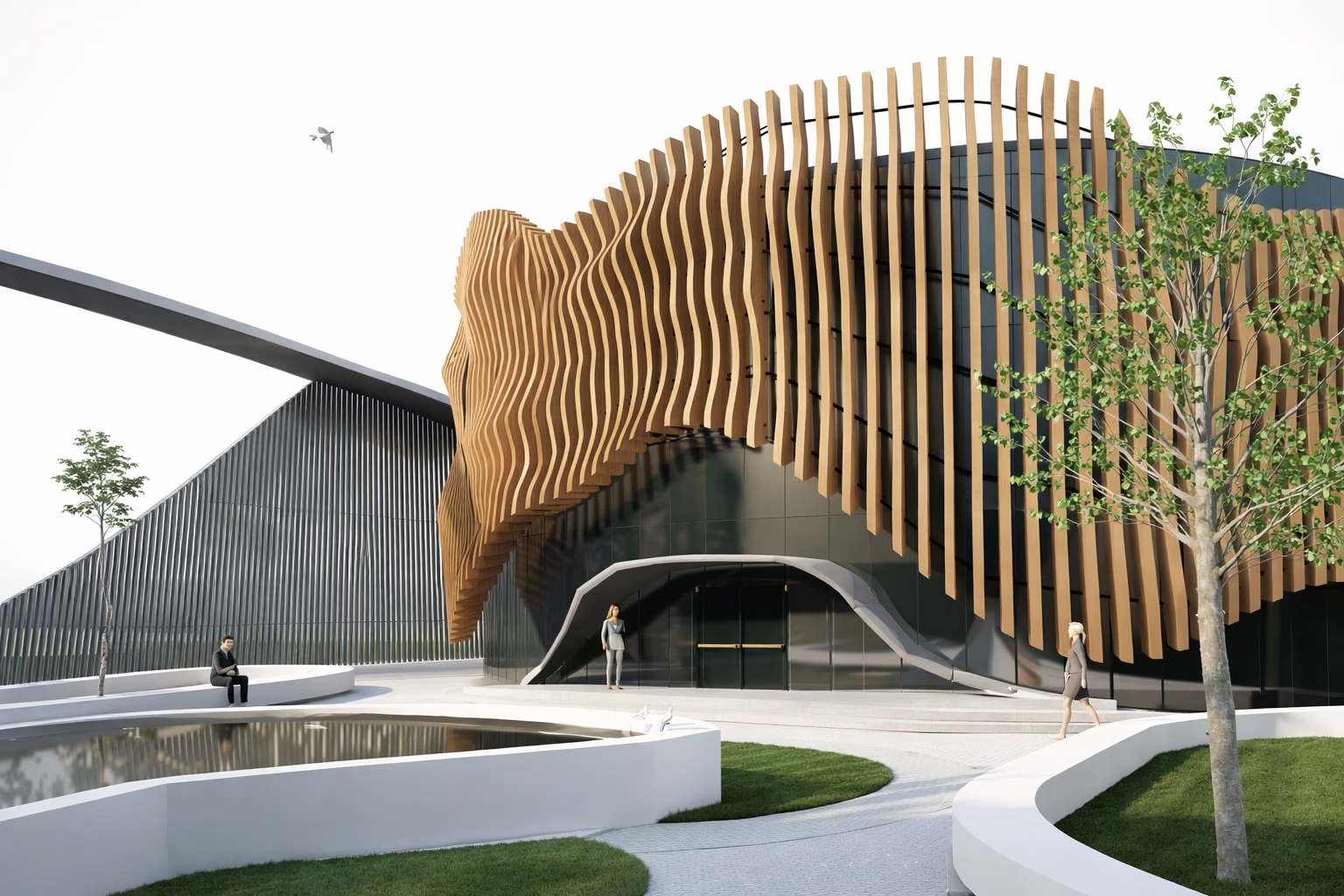
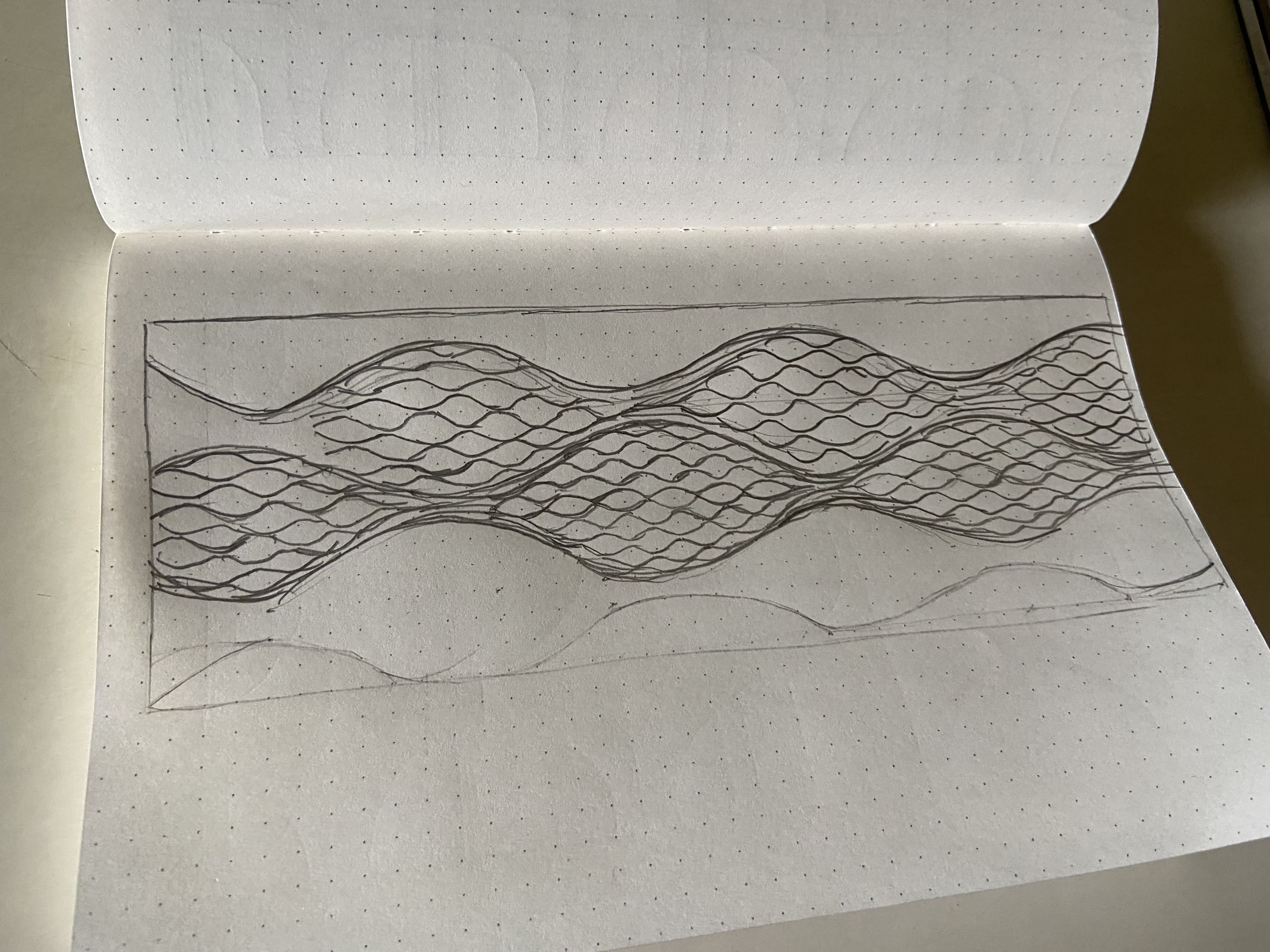
In our Ophidia concept for a factory, the façade is drawn from a stone carving of two entwined serpents. The lattice rises and falls in waves around a white block. By day it reads as soft relief on smooth white walls. After dark it is lit from behind and glows above the glazed base.
5. It Keeps the Heat Out Without Closing You In
Beauty is only half the job. A geometric façade becomes a structured shading device that offers climatic comfort. It intercepts solar heat before it reaches the glass, and its coverage is calibrated to the orientation of the building, while controlled apertures keep the view outside. We go deeper into this in Climatic Interventions Through a Geometric Façade.
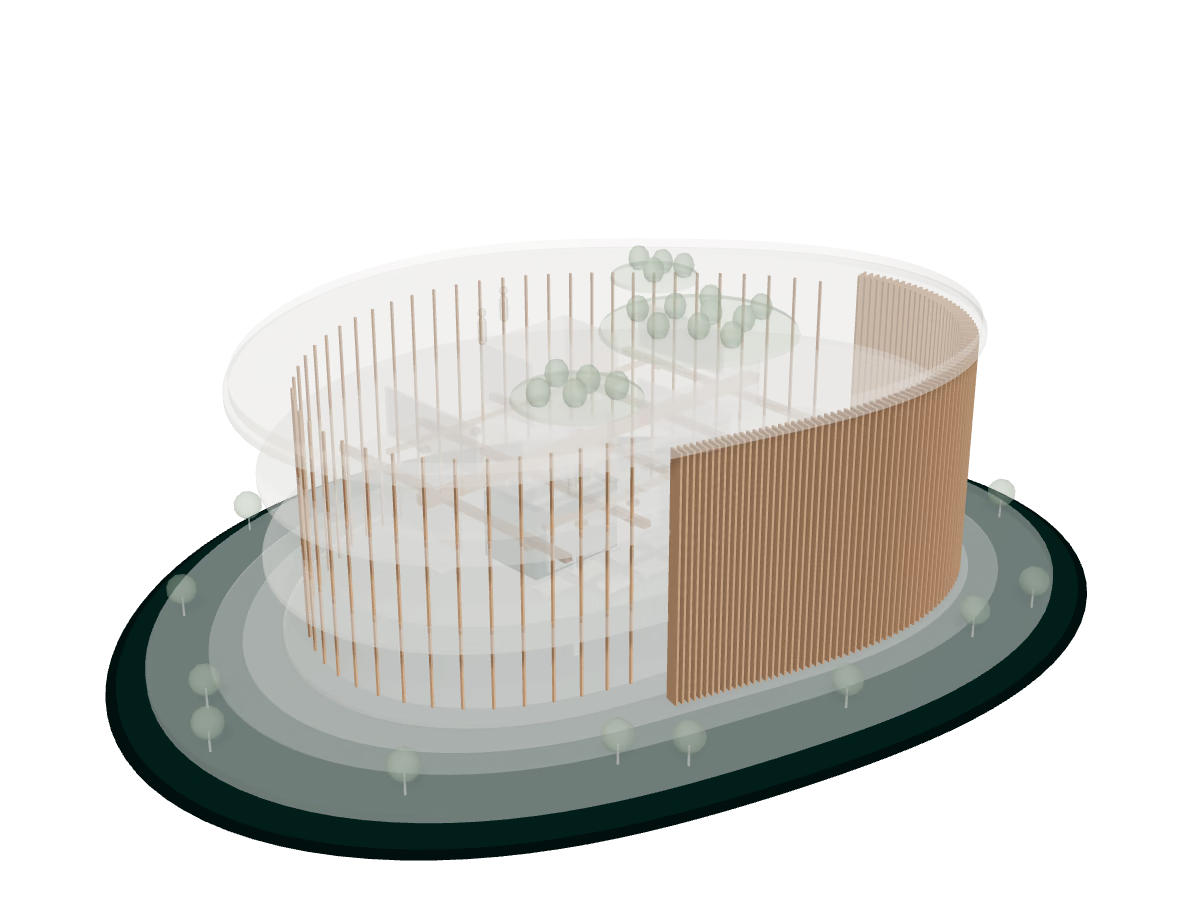
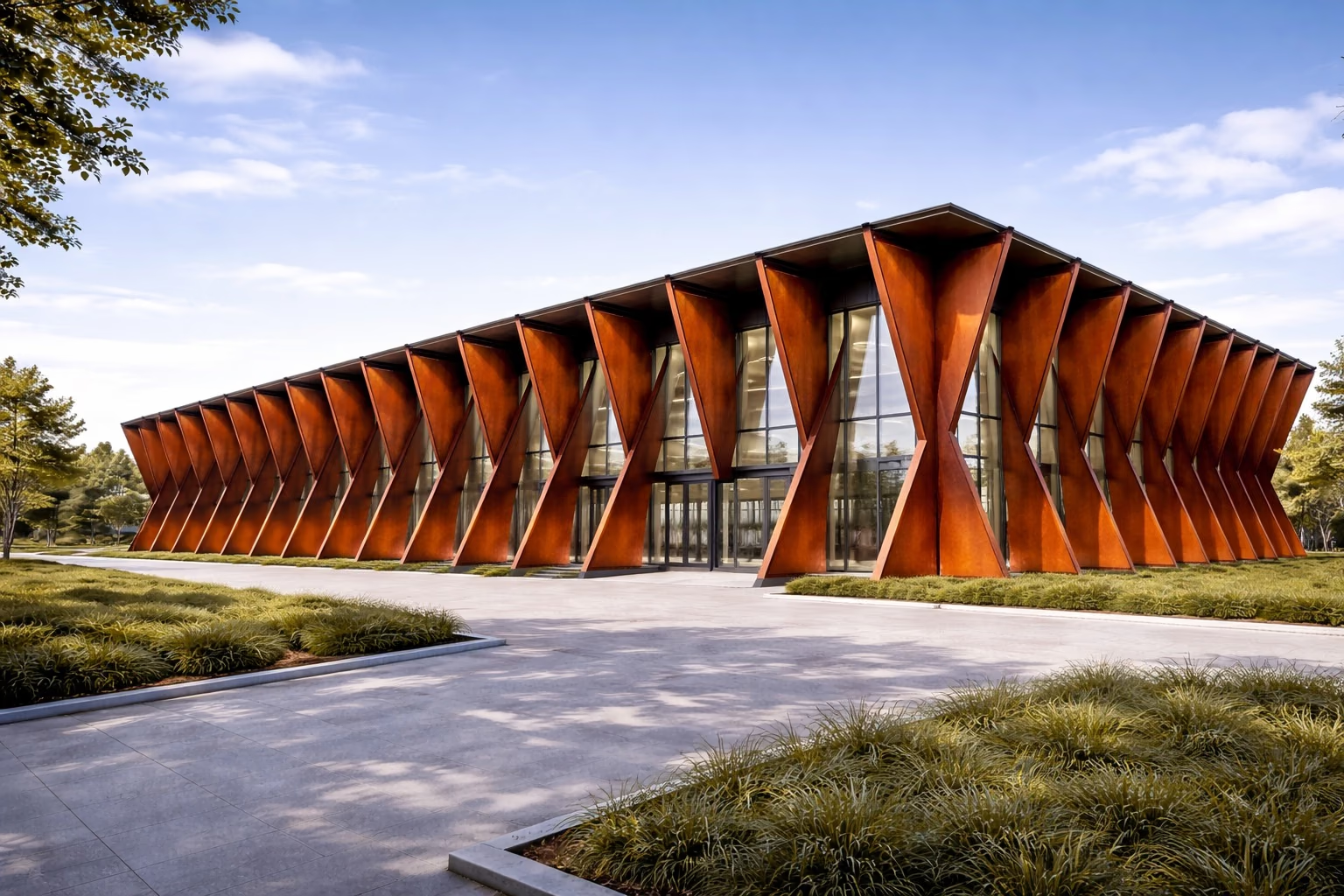
On our Triad factory concept, fins of Corten steel stand close together all the way around the glass hall.
6. Your Existing Building Can Get a New Face
Can you change an existing façade? Yes. We approach the building façade as a solid form, holistically, not just its front face. If you are prepared to embrace a new visual identity for your building, it is possible to elevate your existing façade.
An assessment of the existing structure, regulatory norms and prevailing climatic conditions is carried out in detail. We then propose practical design solutions to elevate your building’s exterior.
How a Geometric Façade Takes Shape
Here is the path a geometric façade takes in our studio, shown through our own concepts:
- Find the idea. It can come from nature, as with the dahlia petals, or from a piece of craft, as with the serpent carving behind Ophidia.
- Turn it into a rule. On Dahlia, the corner point is the origin and a Fibonacci spiral guides the flow of the petals.
- Draw it by hand. Triad began as crossing pencil lines in a sketchbook. The lines became triangles in pairs, then a measured line drawing of the long elevation.
- Test it in a model. A white model of Triad tested how the fins turn the corners.
- Tune it to the sun. Coverage is calibrated to the orientation of the building, so each face gets the shade it needs.
Before You Redesign Your Office Elevation, Ask
- What should the building say about the brand, in one line?
- Which faces of the building take the most sun?
- Where does glass help, and where does it only let heat in?
- What will the existing structure and local regulations allow?
- Will people remember the building after seeing it once?
If you can answer these, you are ready to talk to a façade designer. To see how we take a façade from first idea to construction drawings, visit our office façade and elevation design service, or read about modern façade design for IT office buildings.
Frequently Asked Questions
What is a geometric façade?
A geometric façade uses geometry to shape the face of a building. It gives the building a visual structure, makes it instantly recognisable and memorable, and can work as a structured shading device that offers climatic comfort.
What is the difference between a façade and an elevation?
In everyday use both mean the face of a building. The façade is the built face that people see; the front elevation is how architects draw that face. Either way, it is the first impression your office gives.
Why does the elevation of an office building matter?
The façade, or front elevation, is the face of the organisation and the first impression it gives. It introduces your brand to visitors and should communicate your brand’s values through its design language.
What is a parametric façade?
A parametric façade is a pattern generated by a set of rules rather than drawn piece by piece. On our Dahlia concept, petal modules follow a Fibonacci spiral from the corner, and the pattern can be scaled, rotated and adapted to other façade proportions and orientations.
How does a geometric façade keep a building cool?
It works as a structured shading device. Solar heat is intercepted before it reaches the glass, the glass area is reduced on faces oriented towards the sun path, and coverage is calibrated to the orientation of the building, while controlled apertures keep the view outside.
Can an existing building get a new façade?
Yes. We first assess the existing structure, regulatory norms and prevailing climatic conditions in detail, then propose practical design solutions to elevate the building’s exterior and give it a new visual identity.
Do you design façades outside Chennai?
Yes. The studio is based in Nungambakkam, Chennai, and works with clients across India, with projects in Chennai, Mumbai, Bengaluru and Telangana.