Your office space reflects your brand’s identity, values and story.
A well-designed office looks good, and it also inspires employees, impresses clients and strengthens your brand presence.
This blog sets out six creative strategies for turning your office into a space that tells your brand’s story to everyone who steps through the door.
Define Your Brand Identity with Office Interior Design
You need a clearly defined brand identity before an office can reflect your story. Start by understanding your organization’s core values, mission and vision. The design narrative is built on these.
Bring things that are particular to you, like your company’s history, culture or industry focus, into the design. Use artwork to highlight milestones, or architectural features that echo your industry.
When storytelling, functionality and design are in balance, the workspace is productive and also stands for your brand. Every part of the office then connects people to your identity and reinforces your values.
Enhancing Office Interior Design Through Visual Storytelling
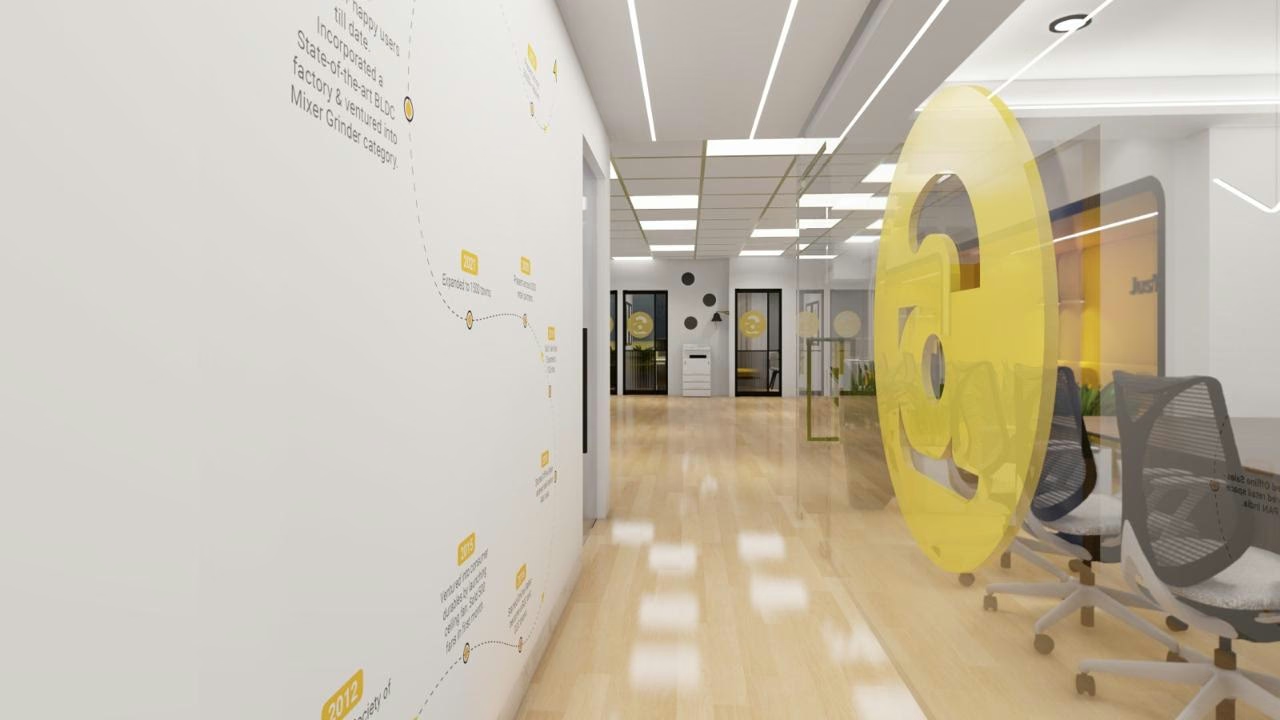
Visual storytelling makes an office a more engaging place to be. Murals, graphics or installations can show your brand’s history, milestones and ethos, and they give employees a sense of pride and connection.
Every wall in the office can tell a part of your story, and the effect is motivating. Brand colors, logos and typography worked subtly into furniture, walls and decor reinforce identity without overwhelming the space.
Discreet details, such as branded cushions or logo placements on partitions, give a cohesive, natural look, and the workspace ends up reflecting your company’s character.
Designing Experience Zones for Exceptional Office Interior Design
A balance of design, storytelling and functionality can turn a workspace into an experience that holds the attention of employees and visitors.
Lounges and breakout areas can also show your brand’s products or services and reflect what the brand is. Carefully chosen design elements give visitors a glimpse of your identity.
Interactive displays and digital installations catch people’s attention and invite them to take part. Product demos and timelines of company milestones are two examples, and features like these make your brand narrative memorable.
Choosing Materials and Textures for Office Interior Design
Materials and textures matter a great deal when an office is meant to reflect your brand. Apart from how they look, they say something about your values and identity.
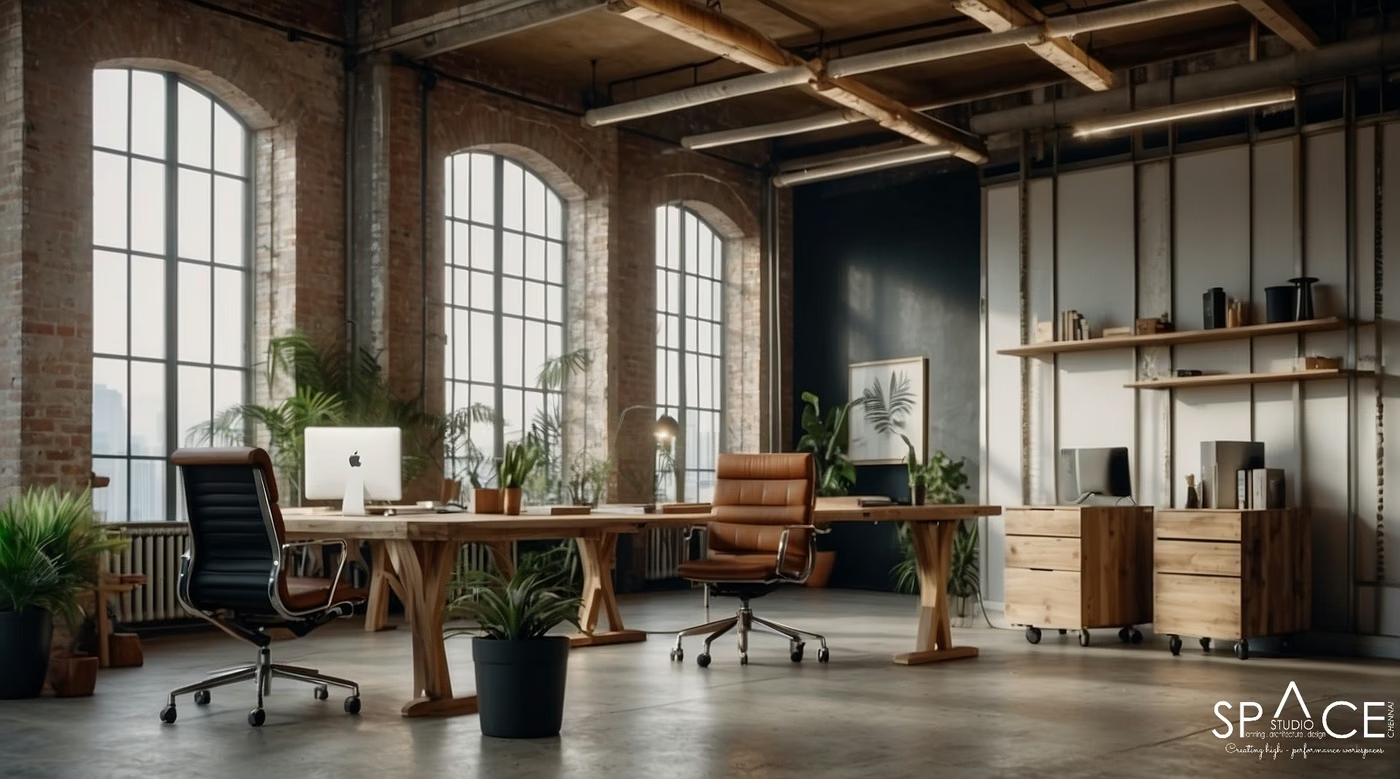
For eco-conscious brands, sustainable choices like reclaimed wood, recycled metals, or biodegradable fabrics show environmental commitment.
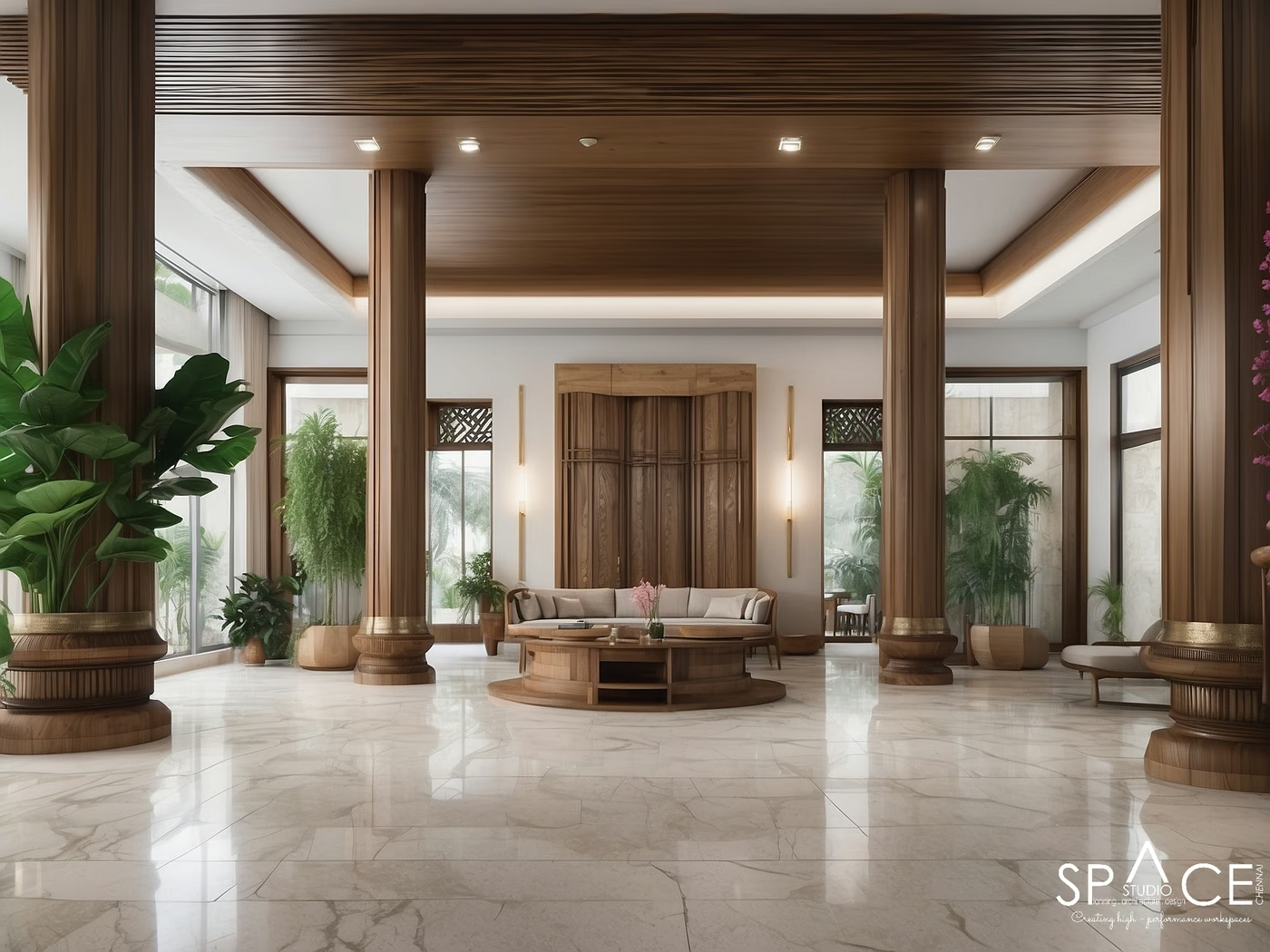
Brands that emphasize luxury might use materials like marble or polished brass to convey sophistication.
Textures add to the story. Minimalist brands can opt for sleek surfaces and clean lines, while rustic styles might feature rough-hewn wood or exposed brick for authenticity.
Futuristic brands can use glossy finishes or metallic textures for a space that looks modern and innovative.
Reflecting Brand Values Through Smart Office Design
For brands that prioritize collaboration, design open, flexible spaces that encourage interaction and teamwork. Use movable furniture and adaptable layouts to accommodate various group sizes and activities, so people can talk and share ideas.
For innovation-driven brands, elements that encourage creativity are essential. Create brainstorming pods or tech-enabled zones where fresh ideas can start. Equip these spaces with the latest tools, like interactive whiteboards or virtual reality setups, to support thinking and exploration.
When you tailor environments to your brand’s core values, you get spaces that fit your mission and help your teams collaborate and innovate.
Personalizing Employee Touchpoints in Office Interior Design
An office that reflects your brand needs a careful balance of design, storytelling and functionality. Personalize the employee touchpoints with subtle nods to your culture, and people will feel a connection to the place.
Bring local influences into the decor, celebrate team achievements with displays, or design cozy spaces for team bonding. Details like these make for a welcoming, inclusive atmosphere where employees feel represented.
This approach improves the work environment and shows your brand’s commitment to its people. When employees feel valued and connected through their surroundings, they are more engaged and more motivated to do their best work.
In summary, a carefully designed office reflects your brand and gives employees and visitors a sense of pride and belonging.
A workspace aligned with your brand’s values and identity engages employees and leaves a lasting impression on visitors.
Your office becomes an extension of your brand and tells your story every day.
Office Branding Ideas From Our Own Projects
Three offices we designed show three different ways of doing it.
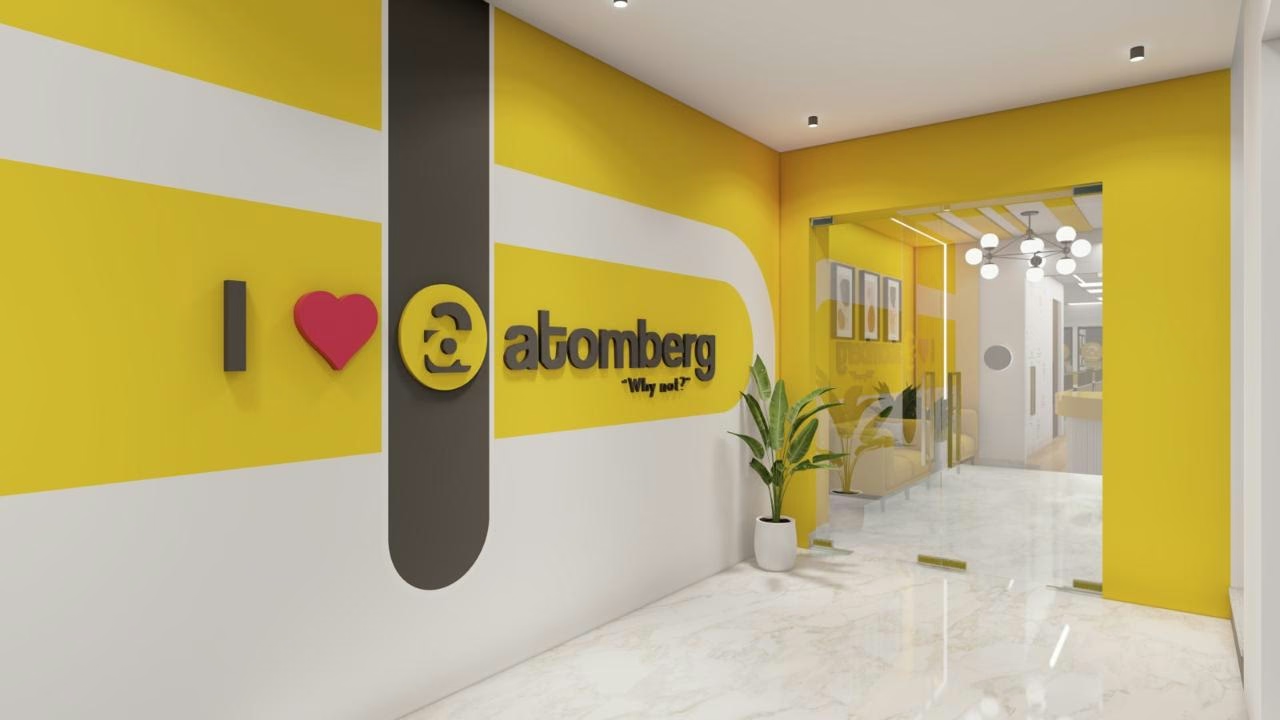
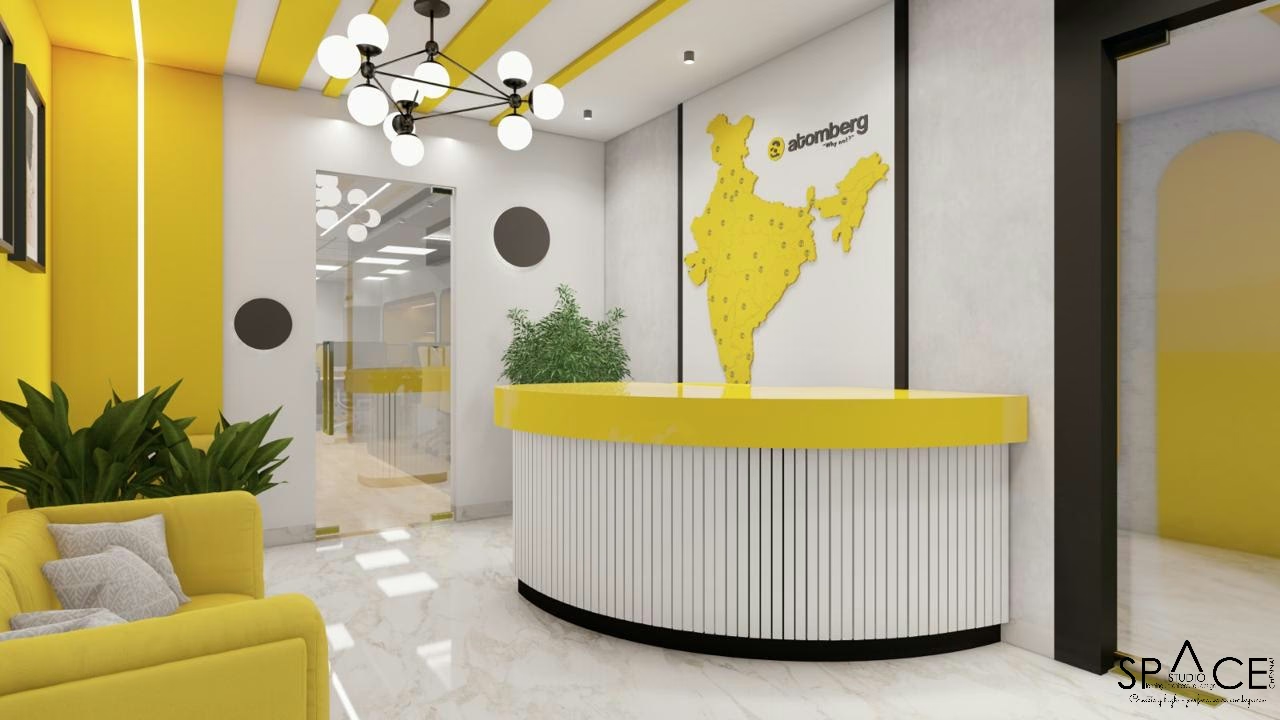
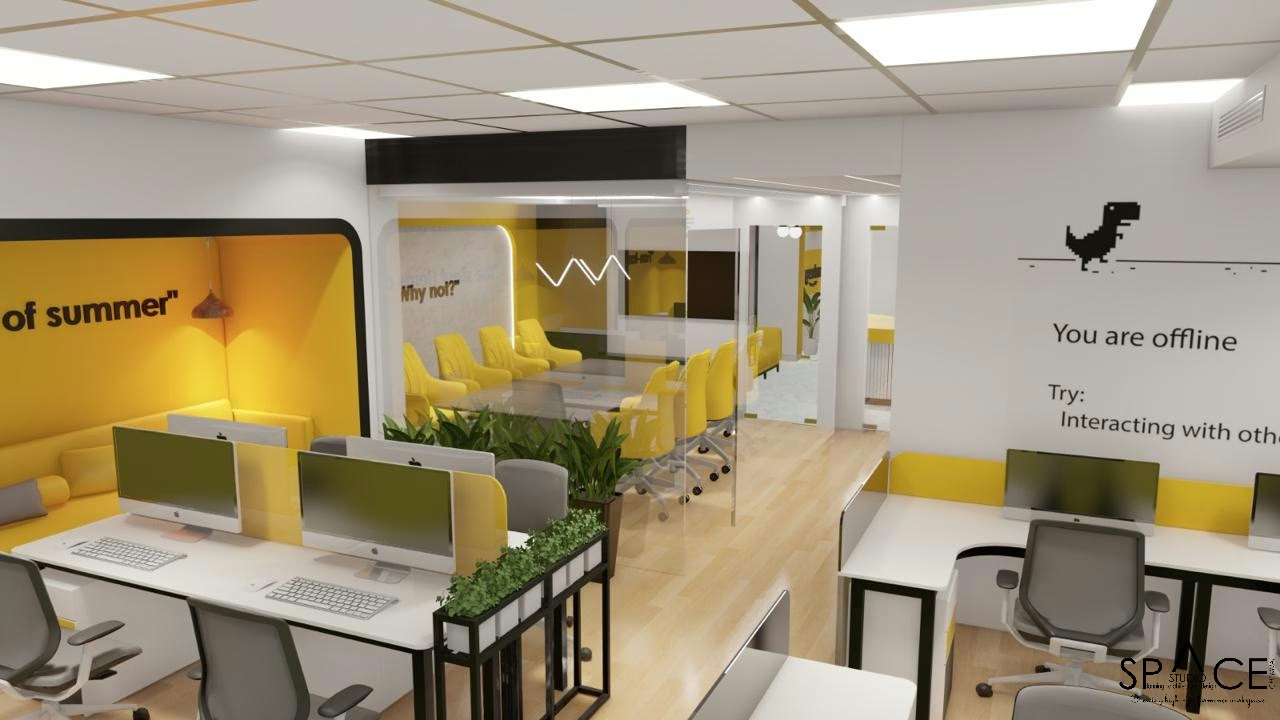
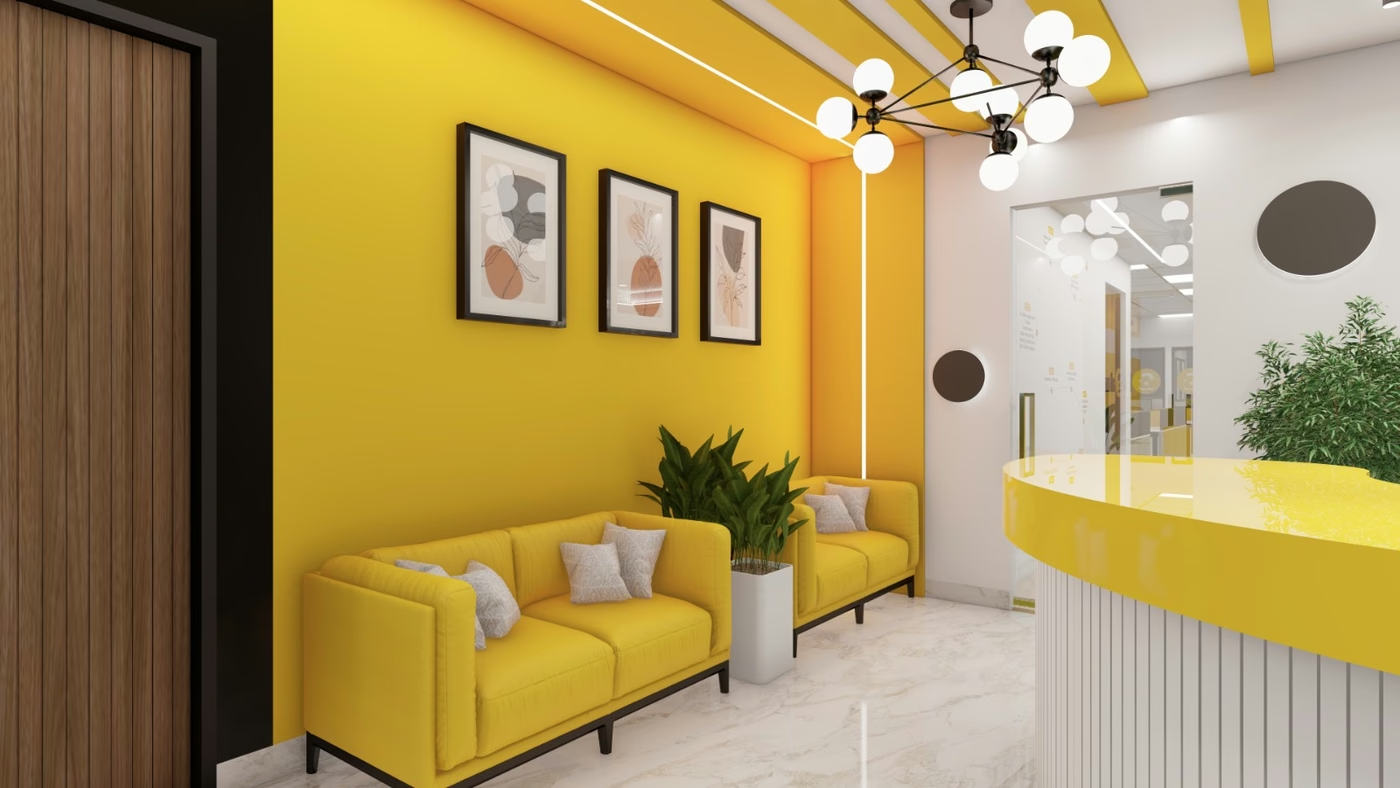
Atomberg: the logo colours, used with restraint. Atomberg's logo is yellow and black, and those two colours became the palette. The reception got a feature wall in the logo's yellow, black ergonomic chairs took yellow cushions, and the conference room carpet carries a quiet pattern in the same colours. A "Story Time" corner has a wall with the company's own taglines on it, so the brand's words are in the room as well as its colours. There is more on how the Atomberg office was renovated.
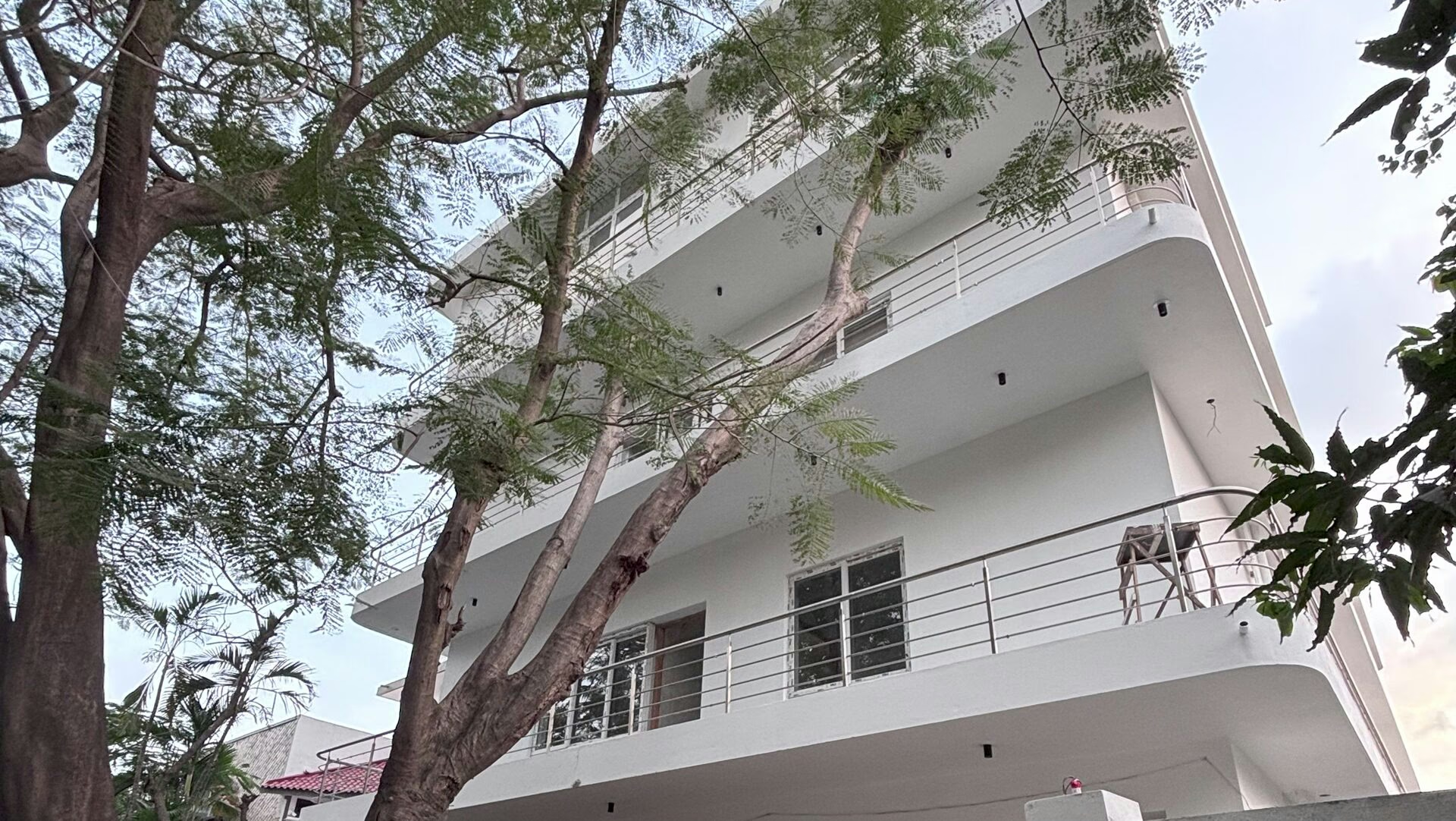
ABS Marine Services: the industry, more than the logo. ABS works in the marine industry, so the building takes its cues from the sea. The facade recalls a yacht, with sleek lines and wave-like patterns. Inside, the office is clean and uncluttered, with marine colour accents, custom artwork and shipboard materials such as polished wood and brass. The ABS Marine Services project has the full set of photos.
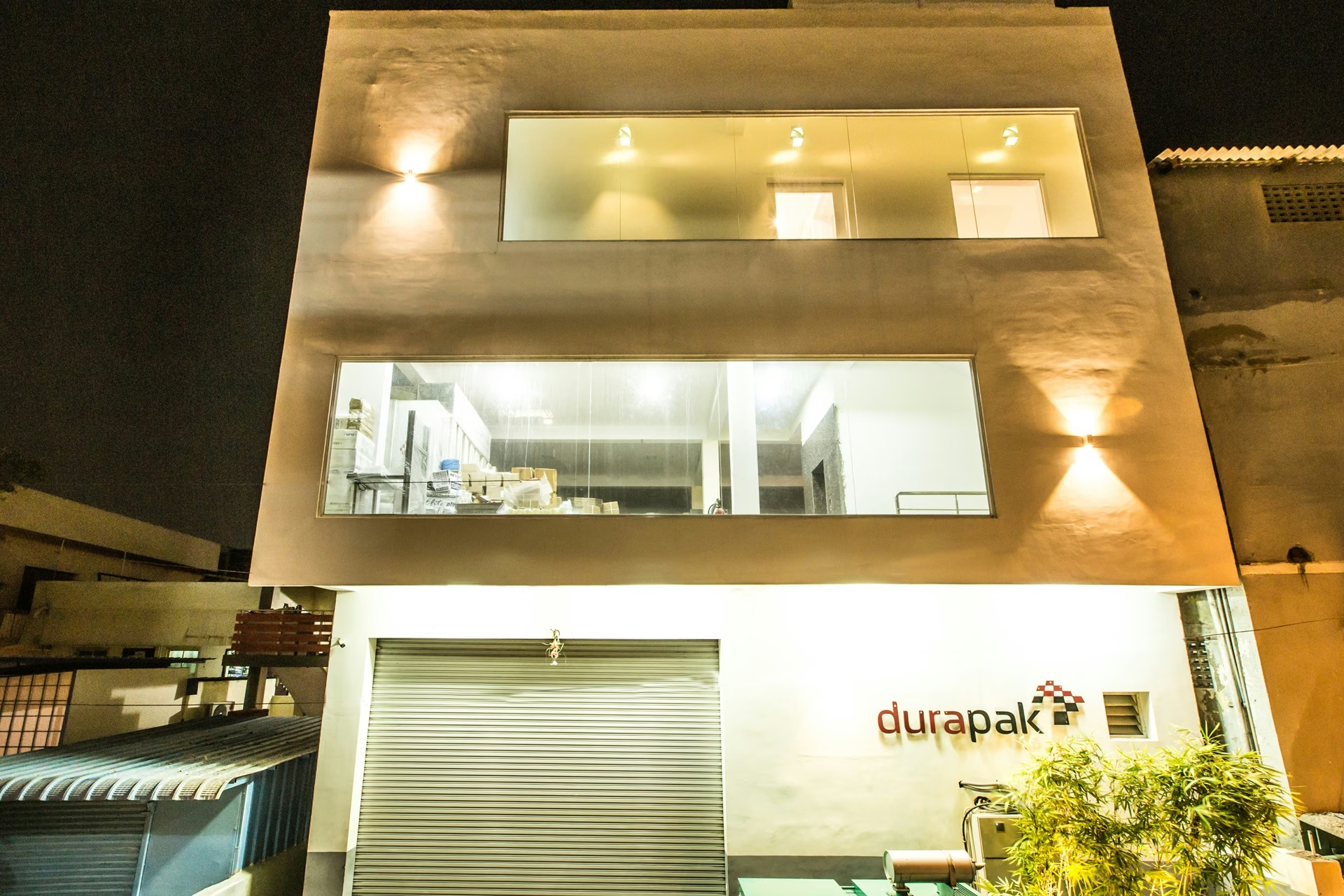
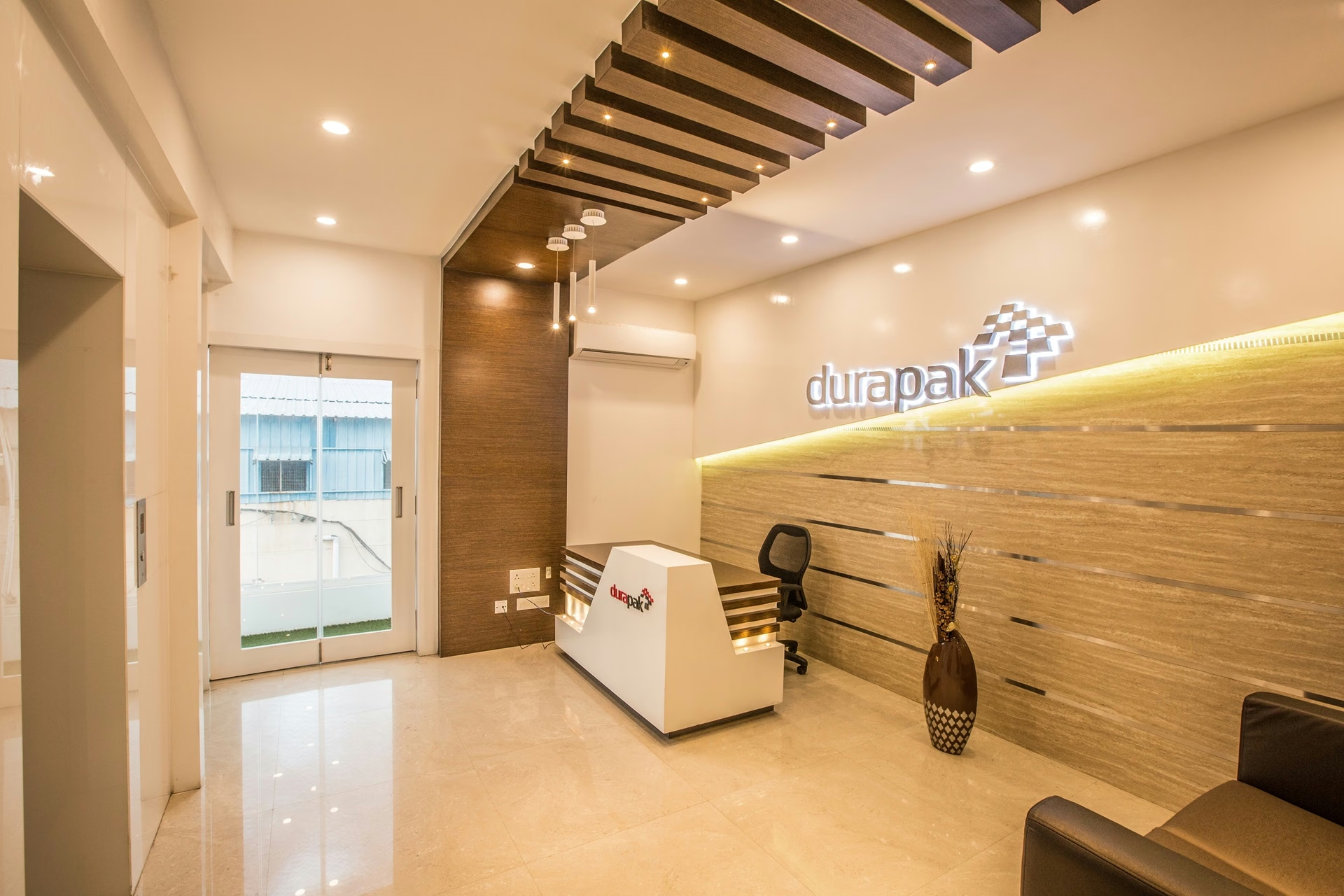
Durapak: a reception built to impress. Durapak's founder wanted an office that would impress international clients. The reception does most of that work, with beige and brown tones against white, subtle lighting, and stainless steel strips set into marble behind the company name. See the Durapak office.
Interior Branding: Where the Brand Shows Up in an Office
Interior branding, sometimes called indoor branding, is the brand carried into the rooms of a building, well past the sign on the door. In an office it tends to show up in the same few places:
- The reception. It is the first room a visitor sees, and usually where branding matters most.
- The route through the office. Corridors and walls people pass every day, where milestones, products or the company's story can sit.
- Meeting rooms. Clients spend time here, so a backdrop wall does a lot of work. At Durapak, the conference rooms have custom backdrop walls with concealed LED lighting.
- Breakout spaces. The place for the brand's personality, like Atomberg's Story Time corner.
- The building itself. The elevation is the first piece of branding anyone sees from the road. Ar. Shashi has written about why your office elevation is your brand.
Branded Interior Design Without Overdoing It
A branded interior can turn into a showroom quickly. What has worked on our projects is restraint: one or two brand colours carried all the way through rather than logos on every surface, and materials chosen to suit what the company does. At Atomberg the brand is everywhere and loud nowhere. At ABS there is hardly a logo in sight, and the building still reads as a marine company's.
If you are planning this for your own office, our office interior design team can help you work out where the brand should go first.
Frequently Asked Questions
What is office interior branding?
Designing an office so that it tells the company’s story: its values, mission and vision expressed through visual storytelling, brand colours, logos and typography, experience zones, materials and the details employees use every day.
What are some office branding ideas that work?
Three from our own projects: build the palette from the logo colours and use them with restraint (Atomberg's yellow and black), take the theme from the industry instead of the logo (the nautical details at ABS Marine Services), and put the most care into the reception, where visitors form their first impression (Durapak's marble and steel wall).
How do you reflect brand identity in office interior design?
Start by defining the brand’s core values, mission and vision. Then express them through murals and graphics, brand colours worked into furniture, walls and decor, lounges that show the company’s products, and materials that match its values.
Which materials suit an eco-conscious brand?
Sustainable choices such as reclaimed wood, recycled metals and biodegradable fabrics show the brand’s environmental commitment in the space itself.
How can office design support a collaborative or innovative culture?
For collaboration, open and flexible spaces with movable furniture and adaptable layouts. For innovation, brainstorming pods and tech-enabled zones with tools such as interactive whiteboards.