Introduction
An office is much more than a workplace—it’s where ideas are born, teams collaborate, and businesses grow. Every corner of a workspace influences how employees perform, how clients perceive your company, and how your brand is remembered. A thoughtfully designed office creates an environment that inspires creativity, improves productivity, and supports long-term business success.
As organizations expand and work cultures evolve, office spaces often struggle to keep pace. A layout that once suited your business may now feel inefficient, outdated, or disconnected from your company’s goals. Whether it’s limited collaboration areas, poor space utilization, outdated interiors, or changing workforce needs, these challenges can affect both employee satisfaction and operational efficiency.
Modern office interior design is no longer just about aesthetics. It focuses on creating intelligent, flexible, and functional workspaces that align with business objectives while enhancing employee well-being. Through strategic office space planning, workplace design, and commercial interior design, businesses can create environments that encourage innovation, strengthen company culture, and improve everyday performance.
If your office no longer supports the way your business operates, it may be the perfect time to transform your workspace. Here are ten clear signs that indicate your office is ready for a fresh approach to design.
1. Your Office No Longer Reflects Your Brand Identity
Your workspace is often the first physical interaction clients, partners, and potential employees have with your business. Long before a presentation begins or a conversation takes place, your office communicates who you are as a company. The design, materials, lighting, furniture, and overall atmosphere all contribute to the impression visitors take away.
An outdated office with generic interiors may no longer represent your company’s values, culture, or aspirations. As businesses evolve, their identity evolves too. Your workplace should grow alongside your brand, creating an environment that reflects professionalism, innovation, and confidence.
A well-planned office interior design incorporates brand colors, architectural details, collaborative spaces, and carefully selected materials to create a workplace that feels authentic. Every design element should reinforce your company’s personality while providing employees with a space they are proud to work in.
Commercial interior design is about much more than appearance. It creates meaningful experiences that strengthen brand recognition, improve employee engagement, and build trust with clients. A workspace that truly reflects your business identity becomes a powerful extension of your brand.
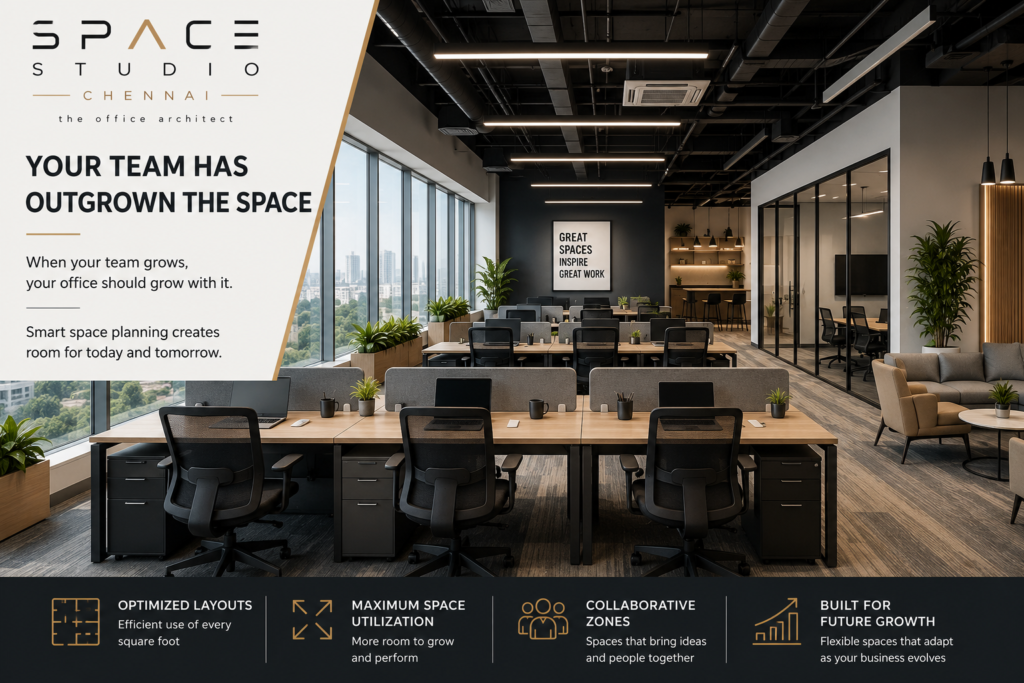
2. Your Team Has Outgrown the Space
Business growth is a positive milestone, but it often exposes the limitations of an existing office layout. As teams expand, departments evolve, and new technologies are introduced, a workspace that once felt comfortable can quickly become crowded and inefficient.
If employees struggle to find meeting rooms, workstations are tightly packed, or collaborative discussions regularly disrupt focused work, your office layout may no longer support your business operations.
Effective office space planning helps organizations maximize available space without compromising comfort or productivity. Instead of simply adding more desks, thoughtful workplace design considers circulation, workflow, collaboration zones, storage solutions, and future scalability.
Modern office design creates a balance between open collaboration areas and quiet workspaces, allowing employees to move seamlessly throughout the day based on their tasks. Flexible layouts, modular furniture, and multifunctional spaces help businesses adapt to changing needs without relocating to a larger office.
Transforming your existing workspace can often unlock hidden potential, making your office feel larger, more organized, and significantly more efficient.
3. Productivity Has Started to Decline
The physical environment has a direct impact on employee productivity. When workspaces are poorly designed, even highly skilled teams may struggle to maintain focus, motivation, and efficiency.
Common workplace issues such as poor lighting, uncomfortable furniture, excessive noise, inadequate ventilation, cluttered layouts, and lack of privacy can gradually reduce employee performance. These seemingly small problems accumulate over time, affecting morale, collaboration, and overall business outcomes.
Modern office interior design prioritizes employee well-being by creating environments that support different work styles. Ergonomic furniture, natural lighting, acoustic treatments, comfortable breakout spaces, and intuitive office layouts help employees stay focused while reducing fatigue throughout the workday.
A productive office also encourages movement and interaction. Dedicated collaboration zones, informal meeting spaces, and quiet focus areas allow employees to choose environments that best suit their tasks. This flexibility improves communication while maintaining opportunities for uninterrupted concentration.
Investing in workplace design isn’t simply about creating a beautiful office—it’s about designing an environment where people can perform at their highest potential. Businesses that prioritize employee experience through intelligent office design often benefit from improved productivity, stronger collaboration, higher employee satisfaction, and better talent retention
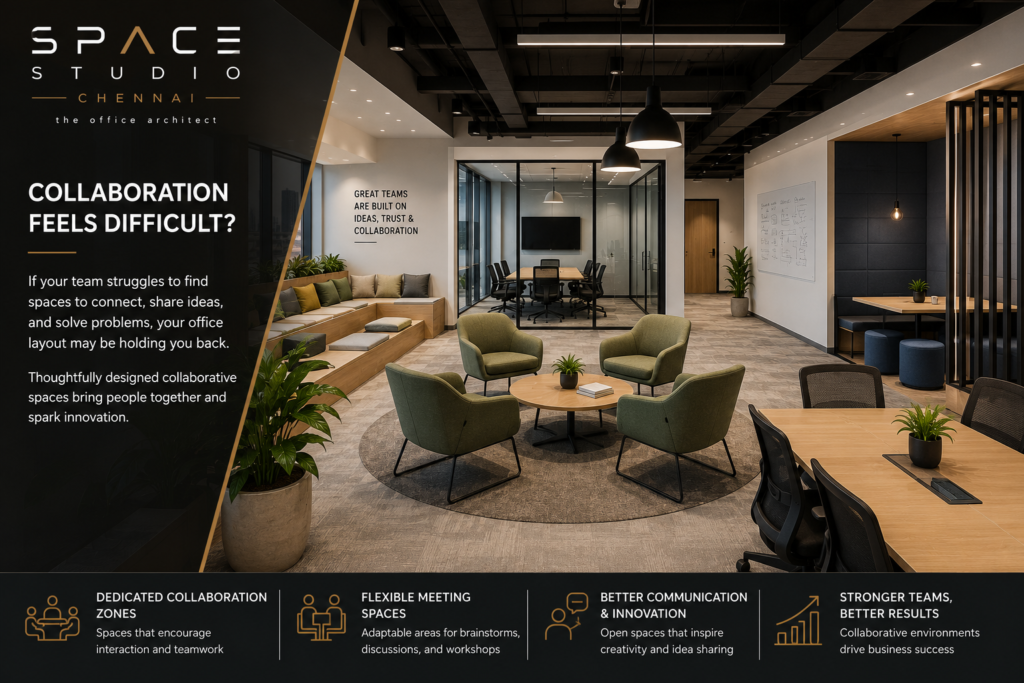
4. Collaboration Feels Difficult
Collaboration is at the heart of every successful business. Whether it’s brainstorming new ideas, solving complex challenges, or conducting client meetings, the office should encourage seamless communication between teams. However, many traditional office layouts were designed for individual work rather than collaborative interactions, making teamwork feel difficult and inefficient.
If employees frequently struggle to find meeting rooms, gather around workstations for discussions, or rely on virtual calls despite being in the same office, it’s a clear sign that your workspace is no longer supporting modern work practices.
A well-planned workplace design creates dedicated areas for different types of collaboration. Open discussion zones, informal breakout spaces, meeting pods, conference rooms, and flexible seating arrangements allow employees to interact naturally without disturbing others who need quiet environments.
The most successful offices balance collaboration with concentration. While open workspaces encourage communication, employees also need private areas for focused tasks, confidential meetings, and uninterrupted work. Modern office interior design carefully integrates both, ensuring every employee has access to the right environment for the task at hand.
Businesses that invest in collaborative office space design often experience stronger teamwork, faster decision-making, improved knowledge sharing, and a more connected workplace culture. A thoughtfully designed office doesn’t just bring people together—it creates opportunities for innovation and long-term business growth.
5. Your Office Feels Dark or Uninspiring
The atmosphere of your office has a significant impact on employee motivation and overall workplace experience. A dull, poorly lit workspace can leave employees feeling tired, disconnected, and less engaged throughout the day. Even clients visiting your office may perceive the business differently based on the quality of the environment.
Many older offices rely on artificial lighting, outdated finishes, enclosed cabins, and monotonous color schemes that no longer meet the expectations of today’s workforce. These elements can make the workplace feel confined and uninspiring.
Modern office interior design focuses on creating environments that enhance both physical comfort and emotional well-being. Natural daylight, carefully selected materials, warm textures, ergonomic furniture, and thoughtful color palettes create a workplace that feels welcoming and energetic.
Introducing biophilic design elements, such as indoor plants, natural materials, and visual connections to the outdoors, can further improve employee well-being. Studies have shown that access to natural light and greenery contributes to improved concentration, reduced stress, and higher workplace satisfaction.
Beyond aesthetics, lighting design plays a crucial role in employee productivity. Layered lighting solutions that combine natural daylight, ambient lighting, task lighting, and accent lighting create a balanced environment suitable for different activities throughout the day.
Refreshing your office doesn’t always require a complete overhaul. Strategic improvements in lighting, finishes, furniture, and workspace organization can significantly transform how employees feel about coming to work each day.
An inspiring office reflects a company’s commitment to its people, creating a positive environment where creativity, collaboration, and innovation can thrive.
6. Technology Doesn't Fit the Space
Technology has transformed the way businesses operate. Hybrid meetings, cloud collaboration, smart presentation systems, wireless connectivity, and digital workspaces have become essential components of modern offices. Yet many workplaces were originally designed before these technologies became part of everyday business operations.
Visible cables, limited power outlets, overcrowded meeting rooms, poor Wi-Fi coverage, and insufficient charging stations create unnecessary frustration for employees and interrupt daily workflows. Technology should support productivity—not become an obstacle.
Professional office space planning ensures that technology is seamlessly integrated into every part of the workplace. Modern office interior design considers power distribution, network infrastructure, video conferencing facilities, digital collaboration tools, and future technological upgrades during the design process.
Smart meeting rooms equipped with integrated displays, wireless presentation systems, acoustic treatments, and video conferencing capabilities allow teams to collaborate effectively whether participants are in the office or working remotely.
Flexible workstations with accessible charging points, cable management systems, and adaptable furniture create cleaner, more organized work environments while supporting evolving workplace technologies.
As businesses continue embracing hybrid work models, offices must become more adaptable than ever before. Investing in future-ready workspace design ensures your office remains functional, efficient, and capable of supporting new technologies for years to come.
A technology-enabled office not only improves operational efficiency but also enhances employee experience, client interactions, and overall business performance.
7. Employees Need More Flexible Workspaces
The modern workplace has evolved significantly over the past few years. Employees no longer spend their entire day sitting at the same desk performing the same tasks. Instead, their work involves focused individual tasks, collaborative brainstorming sessions, virtual meetings, informal discussions, and creative problem-solving. A single workspace cannot effectively support all these activities.
If your office still follows a traditional one-size-fits-all layout, employees may find it difficult to work efficiently. Some may struggle to concentrate in open environments, while others may lack suitable spaces for collaboration or client meetings.
Modern office interior design embraces flexibility by creating a variety of work settings within the same workplace. Quiet zones provide employees with distraction-free environments for focused work, while collaboration hubs encourage teamwork and idea sharing. Informal lounges, breakout spaces, and multifunctional meeting areas give employees the freedom to choose where and how they work throughout the day.
Flexible office space planning also allows businesses to adapt to changing workforce requirements without major structural changes. Modular furniture, movable partitions, and adaptable layouts make it easier to reconfigure spaces as teams grow or project requirements change.
Hybrid work has further increased the need for flexibility. Employees working between home and the office expect workspaces that support both individual productivity and meaningful in-person collaboration. Modern workplace design addresses these expectations by creating environments that are comfortable, connected, and highly functional.
A flexible office not only improves productivity but also enhances employee satisfaction, encourages collaboration, and supports a healthier work-life balance, making it a valuable investment for businesses looking to attract and retain top talent.
8. Your Office Isn't Making a Strong First Impression
First impressions are formed within moments, and your office plays a significant role in shaping how clients, investors, business partners, and potential employees perceive your company.
A cluttered reception area, outdated interiors, poor lighting, or worn-out furniture can unintentionally communicate that your business is resistant to change or lacks attention to detail. On the other hand, a thoughtfully designed office immediately conveys professionalism, confidence, and credibility.
Corporate office interior design focuses on creating welcoming spaces that reflect the company’s identity while providing a positive experience for every visitor. Reception areas should feel inviting, meeting rooms should inspire confidence, and collaborative spaces should demonstrate a culture of innovation and teamwork.
Design details such as premium finishes, carefully selected furniture, integrated branding, artwork, lighting, and natural materials contribute to creating a memorable workplace experience. These elements not only impress visitors but also reinforce employee pride in their workplace.
A professionally designed office also supports recruitment efforts. Today’s workforce values organizations that invest in employee well-being and workplace experience. Candidates often associate the quality of an office with the company’s culture, values, and long-term vision.
Your office should communicate the same level of quality and professionalism that your business delivers through its products and services. Investing in commercial interior design helps ensure that every visitor leaves with a positive and lasting impression.
9. Your Workspace Is Difficult to Maintain
As offices age, maintenance becomes increasingly challenging. Worn-out flooring, damaged furniture, outdated finishes, inefficient storage solutions, and poor space planning can create unnecessary operational challenges while increasing maintenance costs.
When employees constantly deal with broken furniture, inadequate storage, or cluttered workstations, it affects both efficiency and workplace morale. An untidy environment can also leave a negative impression on clients and visitors.
Modern office interior design emphasizes durability, functionality, and long-term performance. Selecting high-quality materials, easy-to-maintain finishes, modular furniture, and efficient storage solutions reduces maintenance requirements while extending the lifespan of the workplace.
Proper office space planning also minimizes unnecessary wear and tear by improving circulation and organizing workflows more effectively. Employees can move comfortably throughout the office without congestion, reducing the likelihood of damage to furniture and finishes.
Sustainable materials and energy-efficient design solutions further contribute to lower operating costs while supporting environmentally responsible business practices. Investing in durable commercial interior design allows businesses to enjoy a workspace that continues performing efficiently for years with minimal upkeep.
Rather than constantly repairing an aging office, many organizations find greater long-term value in transforming the workspace into a modern environment designed for durability, flexibility, and future growth.
10. Your Business Has Changed—But Your Office Hasn't
Businesses rarely remain the same over time. Teams grow, departments expand, technologies evolve, and work cultures shift. Yet many organizations continue operating from office spaces that were designed for entirely different business needs.
Perhaps your company has adopted hybrid work, introduced new service offerings, expanded into new markets, or significantly increased its workforce. If your office still reflects the way your business operated years ago, it may now be limiting productivity rather than supporting growth.
Modern office design should evolve alongside your business. Flexible layouts, scalable workspaces, collaborative environments, and technology-ready infrastructure enable organizations to adapt quickly to changing operational requirements.
Workplace design should also support future growth rather than simply addressing current needs. Creating adaptable office environments allows businesses to accommodate expansion without requiring frequent redesigns or costly relocations.
Transforming your office isn’t just about improving appearances—it’s about creating a workspace that aligns with your business strategy, supports employee performance, and prepares your organization for future success.
When your office grows with your business, it becomes more than just a place to work. It becomes a strategic asset that strengthens company culture, improves operational efficiency, and supports sustainable long-term growth.
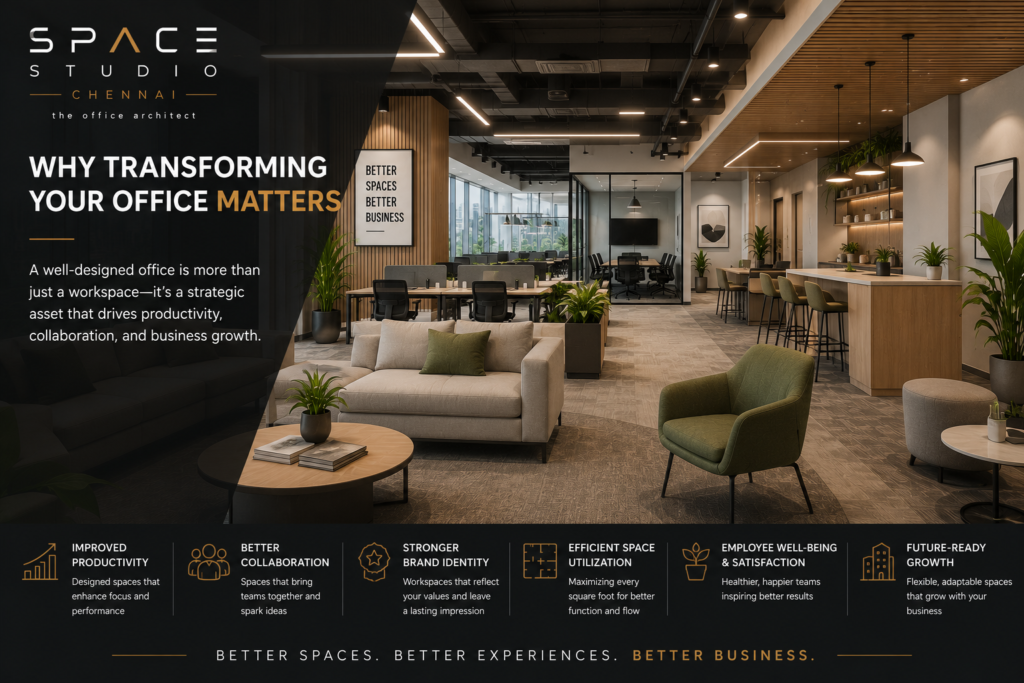
Why Transforming Your Office Matters
An office transformation is far more than updating furniture or refreshing wall colors. It is an opportunity to create a workplace that supports your business goals, enhances employee well-being, and strengthens your company’s identity.
Today’s offices are expected to do much more than provide desks and meeting rooms. They should encourage collaboration, support focused work, accommodate evolving technologies, and create an environment where employees feel motivated every day. A thoughtfully designed office becomes a strategic business asset that contributes to productivity, innovation, and long-term growth.
Investing in office interior design can deliver measurable business benefits, including:
- Improved employee productivity and engagement
- Better collaboration across teams
- Enhanced client and visitor experiences
- Stronger brand identity
- More efficient space utilization
- Greater flexibility for future business growth
- Improved employee retention and workplace satisfaction
- Better integration of technology and modern work practices
Whether you’re a growing startup, an established corporate office, or a large enterprise, investing in workplace design is an investment in your people and your future.
Why Choose Space Studio Chennai?
Designing a workplace isn’t just about creating beautiful interiors—it’s about understanding how businesses operate and how people interact with their environment.
At Space Studio Chennai, we specialize in designing workspaces that combine functionality, innovation, and timeless aesthetics. Every project begins with understanding your business objectives, company culture, workflow, and future plans. This allows us to create office environments that not only look exceptional but also perform efficiently.
With over 18 years of architectural excellence and more than 1 million square feet of office spaces designed, our experience spans corporate offices, commercial workspaces, IT offices, headquarters, and specialized business environments across industries.
Our comprehensive design approach includes:
- Office Interior Design
- Commercial Interior Design
- Office Space Planning
- Corporate Office Design
- Workspace Design
- Architectural Design
- Space Optimization
- Interior Fit-Out Planning
- Workplace Strategy
- Design Consultation
Every project is carefully tailored to reflect your brand identity while creating an environment that supports productivity, collaboration, creativity, and long-term business growth.
Our goal is simple—to design workplaces where businesses perform better and people enjoy coming to work every day.
Let's Create a Workplace That Inspires Success
Your office should be more than just a place to work—it should inspire innovation, strengthen collaboration, and reflect everything your business stands for.
If your workspace no longer supports your team’s needs or your company’s vision, now is the perfect time to reimagine what it can become.
At Space Studio Chennai, we believe every workplace has the potential to become a powerful business asset. With over 18 years of experience and more than one million square feet of thoughtfully designed office spaces, we help businesses create environments that combine functionality, aesthetics, and purpose.
From office interior design and commercial architecture to workplace strategy and space planning, our team works closely with clients to deliver tailored solutions that enhance productivity, elevate brand identity, and support long-term growth.
Whether you’re planning a new corporate office, refreshing an existing workspace, or creating a future-ready environment for your growing team, Space Studio Chennai is ready to bring your vision to life.
Ready to transform your office?
Get in touch with Space Studio Chennai today and take the first step toward a workspace that truly works for your business.
📞 Phone: 070100 64349
📞 Call us now or 📩 send us your project details to schedule a free consultation with our design experts.
Let’s design a workplace that inspires your people, impresses your clients, and drives your business forward.
Designing Better Workplaces. Building Better Business Experiences.

Space Studio Chennai
Ar. Shashi is consumed by Curved Architecture. With over two decades of excellence in architecture, she is the Chief Architect at Space Studio Chennai (SSC), a leading design studio that specialises in Avant-Garde office spaces. She also owns ASSH- High-End Signature Family Homes brand and her other Firm, Shrithi, specialises in Free-Form Eco Resorts. Her mission is to create aesthetically appealing and functional spaces that are carbon-neutral and sustainable, without compromising on the client’s needs, vision, and dreams.