
Introduction
Architecture is evolving faster than ever before. In 2026, buildings are no longer designed solely for aesthetics—they are expected to be smarter, more sustainable, technology-driven, and focused on enhancing human experiences. From corporate offices and commercial developments to healthcare facilities, modern architecture is transforming the way people live, work, collaborate, and heal.
Businesses today seek environments that improve productivity, support employee wellbeing, reduce environmental impact, and remain adaptable to future needs. As a result, architects are embracing innovative design strategies that combine functionality, sustainability, and technology.
At Space Studio Chennai, we specialize in commercial architecture, workplace design, healthcare architecture, project management, and turnkey solutions. By staying ahead of emerging architecture trends, we help organizations create future-ready spaces that deliver long-term value and exceptional user experiences.
Here are the top 10 architecture design trends shaping modern spaces in 2026.
1. Biophilic Design Takes Center Stage
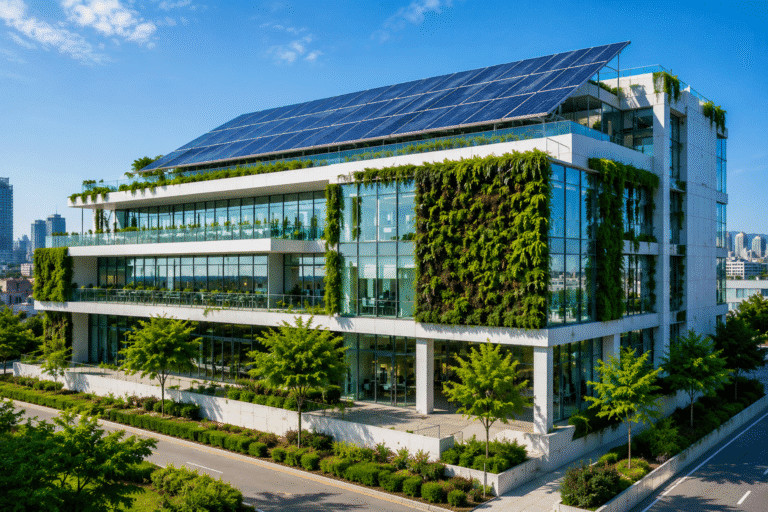
Biophilic design continues to be one of the most influential architecture design trends in 2026. Modern commercial buildings, office spaces, and healthcare facilities are increasingly integrating natural elements such as green walls, indoor gardens, rooftop landscapes, water features, natural ventilation systems, and optimized daylight access.
The goal of biophilic architecture is to strengthen the connection between people and nature. Research consistently shows that nature-inspired environments help reduce stress, improve concentration, boost employee productivity, and support overall wellbeing.
For corporate office design and workplace architecture, biophilic elements create healthier and more engaging work environments. Employees benefit from improved air quality, natural light, and visual connections to greenery, resulting in higher satisfaction and productivity.
Healthcare facilities are also embracing biophilic principles by incorporating healing gardens, natural materials, and calming environments that enhance patient recovery and comfort.
As a leading architecture firm in Chennai, Space Studio Chennai incorporates biophilic design principles into commercial buildings, workplaces, and healthcare facilities to create sustainable, people-centered environments that promote wellbeing and long-term value.
2. Smart and Connected Buildings
Smart building technology is transforming the future of commercial architecture and office building design. Modern buildings are becoming increasingly intelligent through the integration of automated lighting systems, IoT-enabled sensors, smart HVAC controls, occupancy monitoring systems, and centralized building management platforms.
These technologies help organizations improve operational efficiency, reduce energy consumption, enhance security, and optimize building performance. Smart buildings can automatically adjust lighting, temperature, and ventilation based on occupancy and environmental conditions.
For commercial buildings and corporate office design projects, smart building technologies provide significant cost savings while improving user experiences. Employees benefit from more comfortable environments, while facility managers gain access to real-time performance data and predictive maintenance insights.
Healthcare architecture is also embracing smart technologies through intelligent monitoring systems, touchless controls, and advanced environmental management systems.
As businesses continue to prioritize digital transformation, smart building design is becoming an essential component of modern commercial architecture.
3. Sustainable and Energy-Efficient Design
Sustainability remains one of the most important priorities in modern architecture. Businesses, developers, and organizations are increasingly seeking commercial building designs that reduce environmental impact while improving operational efficiency and long-term value.
Modern architecture projects incorporate energy-efficient building envelopes, renewable energy systems, rainwater harvesting, sustainable construction materials, green roofs, and advanced insulation technologies.
These features help reduce energy consumption, lower operating costs, and contribute to healthier indoor environments. Sustainable architecture is particularly important for corporate offices and commercial buildings seeking green building certifications and compliance with environmental standards.
Healthcare facilities are also investing in sustainable architecture to improve energy performance while creating healthier environments for patients and staff.
As experienced architecture consultants in Chennai, Space Studio Chennai focuses on creating environmentally responsible architecture solutions that support both business growth and sustainability goals.
4. Flexible Workplace Design
The workplace has changed dramatically in recent years, and architecture is evolving to support these changes. Flexible workplace design has become a key trend in office building architecture, particularly for IT companies, corporate offices, and business organizations.
Modern workplace design includes collaborative work zones, meeting pods, breakout areas, flexible seating arrangements, wellness spaces, and multifunctional environments that support diverse work styles.
Rather than assigning employees fixed workstations, organizations are creating adaptable spaces that encourage collaboration, creativity, and innovation. Flexible workplace architecture also supports hybrid work models, allowing businesses to adapt to changing workforce requirements.
For companies investing in corporate office design, flexibility improves productivity, employee engagement, and long-term operational efficiency.
At Space Studio Chennai, we design workplace environments that balance functionality, collaboration, and employee wellbeing while supporting future growth.
5. Adaptive Reuse of Existing Structures
Adaptive reuse has become one of the most valuable strategies in commercial architecture and sustainable building design. Instead of demolishing older structures, architects are transforming existing buildings into modern, functional spaces.
Former warehouses, industrial buildings, office complexes, and commercial properties are being repurposed into vibrant workplaces, commercial hubs, educational facilities, and mixed-use developments.
This approach significantly reduces construction waste, conserves resources, and minimizes environmental impact. It also preserves the character and cultural value of existing structures while introducing modern functionality.
For developers and businesses, adaptive reuse often provides financial advantages compared to new construction while creating unique architectural experiences that stand out in the market.
As sustainability becomes increasingly important, adaptive reuse will continue to play a major role in shaping the future of commercial building design.
6. Healthcare-Centered Design
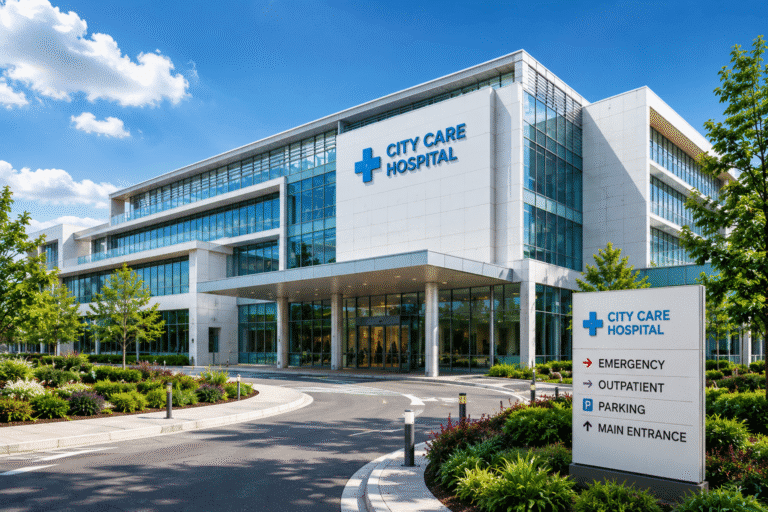
Healthcare architecture is evolving rapidly as hospitals, clinics, and healthcare organizations focus more on patient wellbeing and operational efficiency.
Modern healthcare facility design emphasizes natural light, calming interiors, intuitive navigation, infection-control strategies, efficient circulation systems, and patient-centered environments.
Research has shown that thoughtfully designed healthcare spaces can reduce stress, improve recovery outcomes, and enhance overall patient experiences. As a result, architects are creating environments that support both physical and emotional wellbeing.
Healthcare facilities are also incorporating flexible treatment spaces, advanced medical technologies, and future-ready infrastructure to accommodate changing healthcare requirements.
Healthcare architecture in 2026 is not only about functionality—it is about creating healing environments that improve quality of care while supporting healthcare professionals and patients alike.
7. Modular and Prefabricated Construction
Modular construction is revolutionizing the way commercial buildings, healthcare facilities, and office developments are delivered.
By manufacturing building components in controlled environments before transporting them to construction sites, modular construction significantly reduces project timelines while maintaining high quality standards.
Benefits include improved quality control, reduced material waste, faster construction schedules, enhanced safety, and lower overall costs.
Modern modular architecture has moved far beyond its early limitations. Today, architects can create sophisticated and highly customized buildings while leveraging the efficiency of prefabrication.
For commercial architecture and healthcare projects where speed and scalability are critical, modular construction offers a highly effective solution.
8. Climate-Responsive Architecture
Climate-responsive architecture focuses on designing buildings that perform efficiently within their local environmental conditions.
Architects are incorporating passive cooling systems, solar shading devices, smart facades, thermal mass materials, natural ventilation strategies, and energy-efficient building envelopes to improve performance.
These solutions reduce energy consumption while enhancing occupant comfort throughout the year. Climate-responsive design is becoming increasingly important as businesses seek sustainable architecture solutions that align with environmental goals.
Commercial buildings, office developments, and healthcare facilities can significantly reduce operating costs through intelligent climate-responsive design strategies.
This trend demonstrates how architecture can work with nature rather than against it.
9. Human-Centric Design
At the heart of every successful building is the people who use it. Human-centric architecture prioritizes comfort, accessibility, wellbeing, and user experience.
Architects are paying closer attention to lighting quality, acoustics, indoor air quality, circulation patterns, ergonomics, and accessibility requirements.
For workplace design, human-centric environments improve employee productivity, creativity, and satisfaction. In healthcare facilities, they support patient comfort and recovery.
Commercial buildings that prioritize user experiences tend to achieve higher occupancy rates, stronger employee retention, and better long-term performance.
Human-centric design reflects a growing understanding that architecture should serve people first while supporting business objectives and operational needs.
9. Human-Centric Design
At the heart of every successful building is the people who use it. Human-centric architecture prioritizes comfort, accessibility, wellbeing, and user experience.
Architects are paying closer attention to lighting quality, acoustics, indoor air quality, circulation patterns, ergonomics, and accessibility requirements.
For workplace design, human-centric environments improve employee productivity, creativity, and satisfaction. In healthcare facilities, they support patient comfort and recovery.
Commercial buildings that prioritize user experiences tend to achieve higher occupancy rates, stronger employee retention, and better long-term performance.
Human-centric design reflects a growing understanding that architecture should serve people first while supporting business objectives and operational needs.
Conclusion
Architecture in 2026 is being shaped by sustainability, technology, flexibility, and human-centered design. From biophilic architecture and smart building technologies to healthcare-centered planning and climate-responsive design, these trends are transforming how modern spaces are designed and experienced.
Businesses today require commercial buildings, office environments, and healthcare facilities that not only look impressive but also support efficiency, wellbeing, innovation, and future growth.
At Space Studio Chennai, we specialize in commercial architecture, workplace design, healthcare architecture, project management, and turnkey solutions. Our team is committed to creating innovative and functional spaces that align with modern business needs while delivering long-term value.
Whether you’re planning a commercial building, corporate office, healthcare facility, or workplace transformation project, Space Studio Chennai is ready to help bring your vision to life with future-focused architectural solutions.
Space Studio Chennai
Architecture | Workplace Design | Commercial & Healthcare Architecture | Turnkey Solutions
Address: 11, Sterling Rd, Nungambakkam, Chennai, Tamil Nadu 600034
Phone: 99620 11113
Website: https://spacestudiochennai.com

Space Studio Chennai
Ar. Shashi is consumed by Curved Architecture. With over two decades of excellence in architecture, she is the Chief Architect at Space Studio Chennai (SSC), a leading design studio that specialises in Avant-Garde office spaces. She also owns ASSH- High-End Signature Family Homes brand and her other Firm, Shrithi, specialises in Free-Form Eco Resorts. Her mission is to create aesthetically appealing and functional spaces that are carbon-neutral and sustainable, without compromising on the client’s needs, vision, and dreams.